Peter Goldsworthy Interview

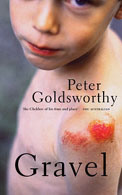
gravel.jpg   Peter Goldsworthy, author of Everything I Knew, has published a new collection of eight stores titled Gravel. He was interviewed by Angela Meyer for the "LiteraryMinded" weblog.

The book is published by Penguin Books, under the Hamish Hamilton imprint.

You're skilled at capturing that moment of erotic awakening, in 'The Nun's Story', and also in Everything I Knew. It's the kind of topic that draws the reader in through memory, the senses and the imagination. Is the best kind of art, for you, something that stirs the intellect, emotions and physical body all at once?

Exactly. Too much literary fiction is pure confection - all head; too much popular fiction is cheap emotions - all heart. There are great exceptions; there is nothing human - nothing of the heart - in Borges' best stories, and they are wonderful. But he knew to keep them short; he would never risk boring us with a novel. I want - unhumbly - to speak to all the organs at once. I've often written about this - as essay called the Biology of Literature, for one - how writing can make us weep and laugh of course, but can make the goosebumps rise (Robert Graves' test of great poetry), or make our hairs stand up on end, or fill us with awe, or stop us sleeping for days.

Which story in Gravel was the most difficult to write, and why?

Hard to say. They are always a mixture of pain and pleasure. 'Sometimes pus, sometimes a poem - but always pain', the poet Yehudi Amichai wrote. 'Shooting the Dog', perhaps - a story that was given to me by my wife Lisa, from her days as a young teacher in the bush. Or the last one, on the love between a middle-aged man and a school girl.
As a child I was pretty often covered in various forms of gravel rash - falling off bikes, tripping in the school playground, which always seems to be covered with bitumen - so I cringe just a little every time I see that cover.

Currently Reading

the_blade_itself.jpg

 The Blade Itself by Joe Abercrombie
Heroic fantasy in the modern style. A fantasy that is laced through with noirish elements, and excellent characterisations. First book of The First Law trilogy.


where_have_you_been.jpg

 Where Have You Been? by Wendy James
What happens when a sister returns after being missing, presumed dead, for twenty years? James enhances her reputation as one of Australia's rising literary novelists.


Recently Read

wyatt.jpg

 Wyatt by Garry Disher
Disher's anti-hero is back after an absence of ten years with a gritty, fast, noirish struggle for survival. All the best aspects of Disher's work are on display here.


leviathan.jpg

 Leviathan by Scott Westerfeld
A Young Adult steampunk novel set at the start of an alternate history First World War. Fast-paced, intriguing and totally captivating.


do_androids.jpg

 Do Androids Dream of Electric Sheep? by Philip K. Dick
Dick's novel of the near future when the difference between human and android is barely discernible. One of the great all-time sf titles.


american_journeys.jpg

 American Journeys by Don Watson
Watson journeys into the heart of America, by train and car. There he discovers the best, and the worst, of humanity and society.


ghostlines.jpg

 Ghostlines by Nick Gadd
2009 Best First Novel at the Ned Kelly Awards. Murder in the art world involving political intrigue and business corruption in Melbourne.


in_it_to_win_it.jpg

 In It to Win It: The Australian Cricket Supremacy by Peter Roebuck
Roebuck's examination of the rise of Australian cricket post-1987. Some flashes of wonderful insight interspersed with long documentary reportage.


things_we_didnt_see_coming.jpg

 Things We Didn't See Coming by Steven Amsterdam
2009 Age Book of the Year. A post-apocalyptic vision of a country (Australia?) in decline, as seen through the eyes of one man. Told in a series of semi-connected short stories.


moneyball.jpg

 Moneyball: The Art of Winning an Unfair Game by Michael Lewis
Lewis's intriguing look into what makes a good baseball team. It's essentially about sport but should also be read from a people/project management perspective. Fascinating stuff.


against_the_machine.gif

 Against the Machine: Being Human in the Age of the Electronic Mob by Lee Siegel
Reads like a polemic against the dangers of the internet, but with little in the way of guidance towards the second part of the title.


blood_moon.jpg

 Blood Moon by Garry Disher
The fifth of Garry Disher's Challis and Destry series set on the Mornington peninsular. A brutal bashing turns political. But is it related to the murder of a local environment protection officer?


replay.jpg

 Replay by Ken Grimwood
World Fantasy Award winner from 1988. Grimwood's intriguing novel about a man who relives his life over and over. A modern fantasy classic which most readers would not recognise as such.


tango_briefing.jpg

 The Tango Briefing by Adam Hall
The fifth of Adam Hall's Quiller series from 1973 and probably about his best. More physical than McCarry.


tears_of_autumn.jpg

 The Tears of Autumn by Charles McCarry
McCarry's masterful spy thriller from 1974. Paul Christopher investigates the asssassination of John F Kennedy.


About this Entry

This page contains a single entry by Perry Middlemiss published on March 17, 2010 8:38 AM.

Reprint: Widow Sums Up by A. H. C. (Alec H. Chisholm) was the previous entry in this blog.

2010 Barbara Jefferis Award is the next entry in this blog.

Find recent content on the main index or look in the archives to find all content.

Powered by Movable Type 4.23-en