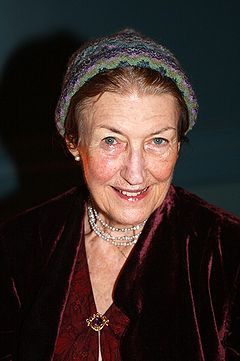
Shirley Hazzard Interviews

shirley_hazzard.jpg    As she approaches her 80th birthday in January 2011, Shirley Hazzard has been interviewed by "The New Yorker" about "travel and transit", and by Richard Ford at the PEN World Voices Festival in May.

"The New Yorker":
When did you begin travelling?

When I was still just a girl. My father was in the diplomatic service, and we moved with his postings. I lived for some years in the Far East, for instance, and it was quite wonderful. The transition and shifting from one place to another meant that I had no education, really. Of course I went to school with I was little, but it was not possible through adolescence to keep an absolute continuity of things. I never went to university, for instance, and there were long gaps in any kind of organized studies.

Did you regret this lack of formal education?

I think that moving around contributed immensely to my life. I would never say that I suffered from it at all. It was quite the opposite. I am uneducated in a sense, but I did read all the time, and I knew very marvellous people. I may be wrong in saying this, but I haven't felt any great privation, because I read constantly and learned other languages. It was reading that was most important to me.

It sounds as though travelling and reading are closely related for you.

All the intellectual pleasure I had as a child came from reading. It was such a pleasure, this act of reading and discovering, and of course it whetted my appetite all the time. One travelled in the reading, as it were.

Richard Ford:

Hazzard said poetry was "the longest important thing in my life." Ford said he thinks writers now "feel challenged to be tough on the page." Hazzard said we are lucky to have "a very flexible language" but that it is nonetheless "a challenge to find another shade or tone."

Richard Ford: "Do you think places have spirits?"

Shirley Hazzard: "I don't know how to express that. A place is always changing... and yet the language gives us continuity. I wish I had a more romantic vision of place."

Richard Ford: "What is the hardest part of being a writer?"

Shirley Hazzard: "I like writing dialogue. I like to have an open ear for speech."

Richard Ford: "Is there something you don't like about writing?"

Shirley Hazzard: "No."

Shirley Hazzard: "Well, writing checks or something."

Richard Ford: "Literary theory has pretty well strangled itself."

Shirley Hazzard: "I don't feel we need to be instructed all the time. The more criticism the less spontaneous acceptance there is."

This interview was recorded and you can watch it here.

Currently Reading

 
before_they_are_hanged.jpg

 Before They Are Hanged by Joe Abercrombie
The second book in the "First Law" series. Epic fantasy written to honour the honour and explore the standard fantasy tropes, as well as to poke ore than a little fun at them at the same time. A big book, but still a page-turner.


how_it_feels.jpg

 How it Feels by Brendan Cowell
A debut novel from a multi-talented author/actor/director. A coming-of-age novel which might well be semi-autobiographical.


Recently Read

 
factotum_au.jpg

 Monster Blood Tattoo: Factotum by D. M. Cornish
The third book in the MBT series. Will we finally find out who Rossamund really is? And will we be sad to leave this fully-realised fantasy world? I suspect the answer will be "yes" to both.


rendezvous_kamakura_inn.jpg

 Rendezvous at Kamakura Inn by Marshall Browne
Browne's first novel in a new series, this time featuring a Japanese detective, Inspector Aoki. This novel finds the inspector investigating an old murder in a snowed-in remote Japanese retreat.


city_and_the_city.jpg

 The City & The City by China MiĆ©ville
MiƩville's Hugo Award winning novel of two cities inhabiting the same physical location. A murder mystery with hints of classic sf/fantasy memes, from Dick to Borges, but in a European setting.
gone_tomorrow.jpg

 Gone Tomorrow by Lee Child
The 13th Jack Reacher novel. Suicide bombers on the New York subway and international terrorism mixed with hard-boiled action makes for an interesting brew.


the_blade_itself.jpg

 The Blade Itself by Joe Abercrombie
Heroic fantasy in the modern style. A fantasy that is laced through with noirish elements, and excellent characterisations. First book of The First Law trilogy.
where_have_you_been.jpg

 Where Have You Been? by Wendy James
What happens when a sister returns after being missing, presumed dead, for twenty years? James enhances her reputation as one of Australia's rising literary novelists.
wyatt.jpg

 Wyatt by Garry Disher
Disher's anti-hero is back after an absence of ten years with a gritty, fast, noirish struggle for survival. All the best aspects of Disher's work are on display here.


leviathan.jpg

 Leviathan by Scott Westerfeld
A Young Adult steampunk novel set at the start of an alternate history First World War. Fast-paced, intriguing and totally captivating.


do_androids.jpg

 Do Androids Dream of Electric Sheep? by Philip K. Dick
Dick's novel of the near future when the difference between human and android is barely discernible. One of the great all-time sf titles.


american_journeys.jpg

 American Journeys by Don Watson
Watson journeys into the heart of America, by train and car. There he discovers the best, and the worst, of humanity and society.


ghostlines.jpg

 Ghostlines by Nick Gadd
2009 Best First Novel at the Ned Kelly Awards. Murder in the art world involving political intrigue and business corruption in Melbourne.


About this Entry

This page contains a single entry by Perry Middlemiss published on August 4, 2010 12:17 PM.

Reprint: Death of Mrs. Mary Hannay Foott was the previous entry in this blog.

Reprint: Review of "The Banjo's" Poems by Anonymous is the next entry in this blog.

Find recent content on the main index or look in the archives to find all content.

Powered by Movable Type 4.23-en