 |
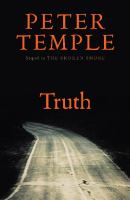
Truth Peter Temple Text Publishing 2010 |
[This novel has been longlisted for the 2010 Miles Franklin Award.]
From the publisher's page
At the close of a long day, Inspector Stephen Villani stands in the bathroom of a luxury apartment high above the city. In the glass bath, a young woman lies dead, a panic button within reach.ReviewsSo begins Truth, the sequel to Peter Temple's bestselling masterpiece, The Broken Shore, winner of the Duncan Lawrie Dagger for Best Crime Novel.
Villani's life is his work. It is his identity, his calling, his touchstone. But now, over a few sweltering summer days, as fires burn across the state and his superiors and colleagues scheme and jostle, he finds all the certainties of his life are crumbling.
Truth is a novel about a man, a family, a city. It is about violence, murder, love, corruption, honour and deceit. And it is about truth.
Stephen Romei in "The Australian": "The Broken Shore is an extraordinary novel, winner of many awards, including the Duncan Lawrie Dagger, one of the world's top prizes for crime fiction. On its release in 2005 several critics made the point that it was a great novel, full stop, and that Temple, who migrated from South Africa in 1980, deserved to be considered in the first rank of Australian writers. His new novel should only reinforce those judgments. ..Temple's characters inhabit a landscape as disturbing as any conjured by Cormac McCarthy and, unlike the futuristic dystopia of The Road, their apocalypse is now."
Edmund Gorman in "The Observer": "Truth might seem, at first, a more promising title for a treatise on epistemology than a hardboiled detective story, so grand is the project that it appears to map out. Yet by the end of Peter Temple's new novel the title feels almost elegiac. The book's major theme is corruption, personal and political. Temple puts old-fashioned abstract values into conflict with a bleak vision of modern reality, and the result is consistently arresting...Temple has long been regarded as one of Australia's most accomplished crime writers, but this is only the second of his nine novels (after the widely acclaimed bestseller The Broken Shore, which features Villani as a minor character) to be published in Britain. A far more literary writer than most of his peers, he eschews the staccato prose rhythms that typify the genre, opting instead for long sentences that do their work over several clauses, blooming and shrinking, and achieving strange, impressionistic effects. His dialogue is entirely distinctive, full of the mangled poetry and beautiful solecisms of ordinary speech. His images can catch in the mind like things glimpsed under lightning. A dead girl's flesh is the colour 'of earliest dawn'. Autumn leaves move through the air 'like broken water, yellow and brown and blood'."
Lucy Clarke in "The Courier-Mail": "Peter Temple's latest book, Truth, is one that sticks. Story, style, suspense, supremely good use of punctuation: all the facets of Temple's latest gem make an indelible impression...It is mesmerising reading, and the tension he builds is so intense that as you make it to the final chapters you almost have to take the book in doses. "
Barry Forshaw in "The Independent": "Interestingly, the jacket comparisons here opt not for the customary James Lee Burke and James Ellroy, but JM Coetzee and Tom Wolfe. If this seems a little vainglorious, Temple's writing is always terse and economical, demonstrating that these two non-crime novelists are indeed apt models."
Short Notices
Karen on the "CrimeSpace" weblog: "The central core of this book is the peeling back of artifice, of pretence, of deception and doubt and the revealing of truth. The truth behind a young girls body in a luxury bathroom; the truth behind the tortured men hanging in a backyard in Oakleigh; the truth about colleagues, mentors and political masters; the truth behind Villani's marriage, his runaway tearaway teenage daughter; his relationship with his brothers; and his fractious, terse, uncomfortable relationship with a father who he doesn't understand, and he thinks, doesn't understand him. Truth is a subject that the reader has to conclude is very very close to Temple's heart as well."
Kerrie on the "Mysteries in Paradise" weblog: "Although the focus of Truth is Villani, and he and those around him question why they do this job, the central story is on a much broader canvas: Victoria in the grip of bushfires, a government teetering on the brink of an election, men with money and dreams, Villani's own history and a forest that means almost more to him than anything else in the world...Peter Temple is the master of a clipped and terse literary style, where dialogue feels like real conversation. There are times when he uses a word rather than a sentence, in some ways the style reminds me of a former Australian great - Patrick White."
Glenn Harper on the "International Noir Fiction" weblog: "The only Truth in Peter Temple's new novel of the Melbourne homicide squad is not what you might think (I won't spoil the revelation). The novel is a complex story with an ambivalent moral sense, told in terse coded dialogue among the police and an almost stream of consciousness narrative in the third person but from the point of view of the new head of homicide, Stephen Villani...In fact, the novelist I was most often reminded of is Joseph Wambaugh: like Wambaugh, Temple derives most of the comic element in the story from the dry wit and interplay among the cops. And like Wambaugh, crimes or moral lapses among the police are a big part of the atmosphere (along with stories about things that have happened among the cops in the past). But although authenticity in the depiction of the police is achieved by both, Temple reaches beyond that toward the complexity of Villani's life as a whole (partly in the stream of consciousness narrative that I mentioned before, a narrative style not chosen by Wambaugh in any of his books that I've read), from childhood forward, and also provides a concrete sense of Melbourne and Australia quite different from Wambaugh's southern California."
Interviews
Ramona Kaval on ABC Radio National's "Book Show".
Jason Steger in "The Age".

