Garry Disher Interview


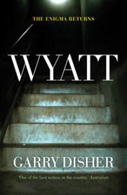
wyatt.jpg    Garry Disher's new novel, Wyatt, has just been published by Text Publishing. It is the first novel in the Wyatt series since The Fallout in 1997.

He was recently interviewed by Jo Case for "Readings":

Wyatt is 'an old-style hold-up man: cash, jewels, paintings'. He avoids the drug scene and is restricted in what he does by the fact that new technology has outstripped his expertise. Is there a certain appeal in writing an 'old-style' criminal like him? Does this add an extra challenge for you when deciding which situations he'll be embroiled in, and how he'll deal with them?

It's probably beyond my skills to create a loveable drug dealer. The face of crime has changed with drugs. There's a greater chance of viciousness and unpredictability when greed, addiction and huge profit potential are involved. Besides, it's more fun, and somehow more worthy, to show Wyatt holding up a payroll van rather than ripping off an addict or a dealer. The problem for me (and him) is finding ways to get the cash without having to hire a dozen guys with specialist technical know-how and gadgetry, not to mention showing the reader how it all works.

Your books - both the Wyatt and Challis and Destry series - are often very Melbourne in tone. Wyatt evokes a range of city locations, from Frankston's teenage mothers, to dodgy stallholders at the Queen Vic markets, architectural monstrosities in Mount Eliza and young yuppies in Southbank. How important is place to your writing?

Setting should be a vital element of all fiction and it's crucial in crime fiction. From a writing craft point of view, I can't see the characters until I see the ground they walk on, and vice versa. Setting is useful in all kinds of ways: adding to our sense of the characters, creating an appropriate mood (e.g., distress), appealing to our senses (we've all had a bus belch on us), and, more broadly, showing the social as well as the topographical diversity of a region.

Currently Reading

the_blade_itself.jpg

 The Blade Itself by Joe Abercrombie
Heroic fantasy in the modern style. A fantasy that is laced through with noirish elements, and excellent characterisations. First book of The First Law trilogy.


where_have_you_been.jpg

 Where Have You Been? by Wendy James
What happens when a sister returns after being missing, presumed dead, for twenty years? James enhances her reputation as one of Australia's rising literary novelists.


Recently Read

wyatt.jpg

 Wyatt by Garry Disher
Disher's anti-hero is back after an absence of ten years with a gritty, fast, noirish struggle for survival. All the best aspects of Disher's work are on display here.


leviathan.jpg

 Leviathan by Scott Westerfeld
A Young Adult steampunk novel set at the start of an alternate history First World War. Fast-paced, intriguing and totally captivating.


do_androids.jpg

 Do Androids Dream of Electric Sheep? by Philip K. Dick
Dick's novel of the near future when the difference between human and android is barely discernible. One of the great all-time sf titles.


american_journeys.jpg

 American Journeys by Don Watson
Watson journeys into the heart of America, by train and car. There he discovers the best, and the worst, of humanity and society.


ghostlines.jpg

 Ghostlines by Nick Gadd
2009 Best First Novel at the Ned Kelly Awards. Murder in the art world involving political intrigue and business corruption in Melbourne.


in_it_to_win_it.jpg

 In It to Win It: The Australian Cricket Supremacy by Peter Roebuck
Roebuck's examination of the rise of Australian cricket post-1987. Some flashes of wonderful insight interspersed with long documentary reportage.


things_we_didnt_see_coming.jpg

 Things We Didn't See Coming by Steven Amsterdam
2009 Age Book of the Year. A post-apocalyptic vision of a country (Australia?) in decline, as seen through the eyes of one man. Told in a series of semi-connected short stories.


moneyball.jpg

 Moneyball: The Art of Winning an Unfair Game by Michael Lewis
Lewis's intriguing look into what makes a good baseball team. It's essentially about sport but should also be read from a people/project management perspective. Fascinating stuff.


against_the_machine.gif

 Against the Machine: Being Human in the Age of the Electronic Mob by Lee Siegel
Reads like a polemic against the dangers of the internet, but with little in the way of guidance towards the second part of the title.


blood_moon.jpg

 Blood Moon by Garry Disher
The fifth of Garry Disher's Challis and Destry series set on the Mornington peninsular. A brutal bashing turns political. But is it related to the murder of a local environment protection officer?


replay.jpg

 Replay by Ken Grimwood
World Fantasy Award winner from 1988. Grimwood's intriguing novel about a man who relives his life over and over. A modern fantasy classic which most readers would not recognise as such.


tango_briefing.jpg

 The Tango Briefing by Adam Hall
The fifth of Adam Hall's Quiller series from 1973 and probably about his best. More physical than McCarry.


tears_of_autumn.jpg

 The Tears of Autumn by Charles McCarry
McCarry's masterful spy thriller from 1974. Paul Christopher investigates the asssassination of John F Kennedy.


About this Entry

This page contains a single entry by Perry Middlemiss published on February 8, 2010 10:52 AM.

Poem: Robbie's Statue by Henry Lawson was the previous entry in this blog.

Australian Bookcovers #197 - Death of a River Guide by Richard Flanagan is the next entry in this blog.

Find recent content on the main index or look in the archives to find all content.

Powered by Movable Type 4.23-en