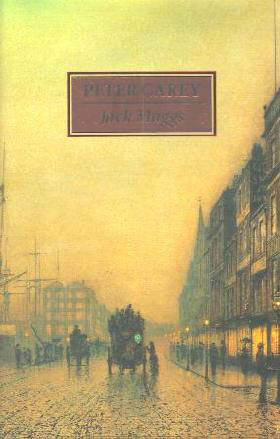
Peter Carey
The following novels constitute the shortlist for the 1998 Miles Franklin Award:
|
|
Jack Maggs Peter Carey |
Dustjacket synopsis:
"So arrives Jack Maggs, one of the great characters of Peter Carey's fiction. So begins a novel that will intrigue, entertain and engross you to the last exhilarating page."
First Paragraph:
It was a Saturday night when the man with the red waistcoat arrived in London. It was to be precise, six of the clock on Saturday the fifteenth of April in the year of 1837 that those hooded eyes looked out of the window of the Dover coach and beheld, in the bright aura of gas light, a golden bull and an overgrown mouth opening to devour him - the sign of his inn, The Golden Ox.
The Rocket (as his coach was aptly named) rattled in through the archway to the inn's yard and the passengers, who had hitherto found the stranger so taciturn, now noted the silver-capped cane - which had begun to tap the floor at Westminster Bridge - commence a veritable tattoo.
He was a tall man in his forties, so big in the chest and broad in the shoulder that his fellows on the bench seat had felt the strain of his presence, but what his occupation was, or what he planned to do in London, they had not the least idea. One privately imagined him a book-maker, another a gentleman farmer and a third, seeing the excellent quality of his waistcoat, imagined him an upper servant wearing his master's cast-off clothing.
His face did not deny the possibility of any of these occupations; indeed he would have been a singular example of any of them. His brows pushed down hard upon the eyes, and his cheeks shone as if life had scrubbed at him and rubbed until the very bones beneath his flesh had been burnished in the process. His nose was large, hawkish, and high-bridged. His eyes were dark, inquiring, and yet there was a bruised even belligerent quality which had kept his fellow passengers at their distance all through that long journey up from Dover.
From the UQP hardback edition, 1997.
Notes:
You can read more about Peter Carey here.
You can read a reviews of the novel in:
|
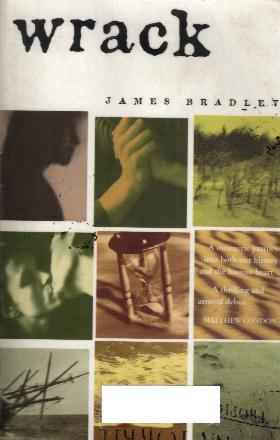
Wrack James Bradley |
Dustjacket synopsis:
"... I saw its great bulk heaving itself out of the sand that spilled from its spars like water, the screaming wind
slicing it free from the grip of the hill, its broken shape like the belly of a dinosaur ... I crawled slowly towards it,
eyes clenched shut against the storm, until its form enveloped me ...
"While searching for the wreck of a Portuguese ship in the sandhills of the southern coast of New South Wales, archaeologist David Norfolk stumbles upon the body of a man murdered fifty years before.
"In a shack nearby an old man lies dying. He too knows something of the ship, and perhaps also its connection to the centuries-old enigma of Java la Grande, a shadowy continent to the south of Timor charted by French mapmakers in the sixteenth century.
"But does the old man have the information David needs? Does he hold a vital clue to the identity of the buried corpse? Determined to know the truth, David uncovers a story of obssession, secrets and sexual passion from a lifetime before.
"Erotic, sensuous and erudite, Wrack spins a web of lies, sex and betrayal in a novel that is as unusual as it is beautiful."
Quotes:
"A mesmeric journey into both our history and the human heart. Bradley has combined a fascinating meditation on the
nature of myth, a murder mystery and the destructive allure of love in prose that shifts and shimmers with the beauty
offine poetry. A thrilling and assured debut." - Matthew Condon
First Paragraph:
From the personal journal of William Townshend, Surgeon, aboard His Majesty's Vessel Berkeley.
17th August 1794
It comes as more than some little surprise to me that I am able to write these words: if I had been asked only twelve
hours ago whether I believed I would survive to see the dawn my answer would have been a simple negative. Yet here I am,
alive and, in good part at least, intact. The night just passed was truly the most terrifying I have ever known, and more
than once I offered up prayers to the Almighty in the sure belief my hours on this earth were at an end.
The ship has been cast upon a shore unknown to the crew or the captain, yet we are some hundred leagues or more to the south of Port Jackson. I hope this place is not an indication of this land's true temper, for it is a miserable place; cold and windswept in the extreme, with little to offer in the way of comfort or succour after our long journey.
Later
I am writing this several hours later, wishing to record a most worrying and curious sight I and several others have
witnessed. The seas having subsided somewhat, the Captain and a group of a dozen or so men, including the repulsive
Colvey, who seems to grow more repugnant with each passing day put ashore in the longboat. I accompanied them at the
invitation of the Captain, who continues to treat me as a gentleman, although I detected in his offer to 'let me see the
temper of my new home' a note of mischief. The seas, although smaller, were far from calm, and the landing of the boat was
only achieved with some difficulty; all of us were soaked fairly to the skin by the time we landed, and the wind, which
seemed to blow straight from the icebound lands of the Antarctic, cut through to our very marrow.
From the Vintage paperback edition, 1997.
About the Author:
James Bradley was born in Adelaide, South Australia, in 1967. He studied at the University of Adelaide, where he
completed a law degree and took honours in philosophy, and later at the University of South Australia and the
Australian Film, Television and Radio School. He has worked as a law clerk, judge's associate, solicitor, research
assistant and editor.
As well as writing and reviewing for newspapers and magazines he has written a book of poetry, Paper Nautilus, which was shortlisted for the 1995 National Book Council Banjo Awards, and edited Blur, an anthology of writing by young Australian writers, also published by Vintage. He lives in Sydney.
|
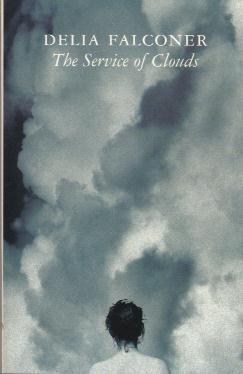
The Service of Clouds Delia Falconer |
Dustjacket synopsis:
"It is 1907 and the Blue Mountains are filled with the grand dreams of elsewhere. Eureka Jones, a young pharmacist's assistant with historical eyes, falls in love with Harry Kitchings, a man who takes pictures of clouds and succumbs to the 'madness of photography'. Their love turns the mountains sapphire blue.
"Set in a vast landscape haunted by sadness and the stories of romance which drift across it, The Service of Clouds combines the lushness of Marquez and the tenderness of Ondaatje to explore passion, illness, and the secret desires men and women bring to mountains."
First Paragraph:
The year the Hydro Majestic Hotel failed as a hydropathic institute Harry Kitchings fell in love with the air and stayed. Les Curtain began to feel the dusk in his lungs. It was a romantic year. Men carried thermometers and dreamed of women struck by lightning. Postmen hauled packets filled with love and human hair. Women carried notebooks and pressed storms in them like flowers. You could feel our love rising from the mountaintops. At least that is how Harry Kitchings might tell it.
What were we in love with? That is an awkward question. If I were to reply that we loved each other it would be for the sake of expediency and politeness. But it is only a half-truth unsuited to this time in that Blue Mountains town when the clouds at the end of every street were filled with the grand dreams of elsewhere. It is more accurate to say that our lives were lived in the service of these clouds which took the forms of our desires. We loved them with a passion that expanded and filled the sky. It was our clouds, for example, which boys carried in photographs to the trenches. The sight comforted them for they knew that these were different from German clouds which were full of dead men's souls. It was among our clouds that consumptives learned to chew mist instead of words, to grasp love or be smothered by it. Their bodies mapped the symptoms of our strange yearnings: our thirst to hear voices in the air, to feel the liquid tremors of the earth. If you place your head on a consumptive's chest you can hear waterfalls. I know. I have done it.
From the Picador paperback edition, 1997.
About the Author:
Delia Falconer was born in Sydney in 1966. In 1992, she won the
Independent's Young Writer of the Year Award, and in 1994 she was awarded first prize in the Island Essay
Competition and the HQ/Joop! Short Story Competition. Her short stories have appeared in the Age,
Australian Love Stories, and Picador New Writing. This is her first novel.

|
The Sound of One Hand Clapping Richard Flanagan |
Dustjacket synopsis:
"In the winter of 1954, in a construction camp that festered like a bad wound in the remote Tasmanian highlands, when Sonja Buloh was three years old and her father was drinking too much, Sonja's mother walked into a blizzard never to return.
"Some thirty-five years later, when Sonja visits Tasmania and her drunkard father, the shadows of the past begin to intrude ever more forcefully into the present - changing forever his living death and her ordered life.
"The Sound of One Hand Clapping is about the underbelly of Australia, the barbarism of Europe, and the destiny of those in the country beyond hope who seek to redeem themselves through love."
Quotes:
"destined to be classic" - Sunday Herald Sun
"A truly extraordinary work: vivid, passionate and utterly compelling. The Sound of One Hand Clapping is raw
as a wound. It opens a world that is strange, brutal and poetic at once and ultimately achieves the kind of spirit-healing
few novels do" - Niall Williams, author of Four Letters of Love
"Flanagan has crafted a book of immmense beauty which holds within it love, grief and a dissection of the anatomy of hurting
that is haunting and unforgettable...The Sound of One Hand Clapping is a book that leaves one humble. In
building character, layer upon layer, Flanagan compels compassion where we would judge, finds value where all is lost.
His book comforts as it confronts. It shines and cuts like a laser' - Canberra Times
"He has the capacity to give voice to wordless passions, primal voices that whisper and echo though memory. Tasmania
reverberates throughout The Sound of One Hand Clapping like a monumental force; a character in its own right" -
Sunday Times
First Paragraph:
All this you will come to understand but can never know, and all of it took place long, long ago in a world that has since perished into peat, in a forgotten winter on an island of which few have ever heard. It began in that time before snow, completely and irrevocably, covers footprints. As black clouds shroud the star and moonlit heavens, as an unshadowable darkness comes upon the whispering land.
At that precise moment around which time was to cusp, Maria Buloh's burgundy-coloured shoes reached the third and lowest snow-powdered step outside their wooden hut. It was then, as she turned her face away from the hut, that Maria Buloh knew she had already gone too far and that she could no longer return.
From the Picador paperback edition, 2000.
Notes:
You can read more about Richard Flanagan here.
The Sound of One Hand Clapping was the winner of the 1998 Victorian Premier's Prize for Best Novel, and the 1999
ABA Australian Book of the Year Prize.
A film version of this novel, with the same name, was released in 1998, directed and written by Richard Flanagan and
featured Kerry Fox and Kristof Kaczmarek.
|
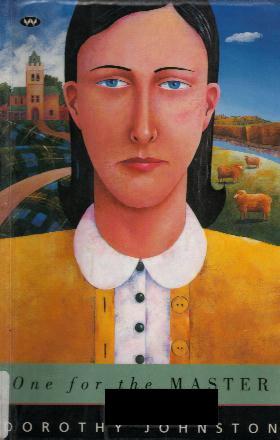
One For the Master Dorothy Johnston |
Dustjacket synopsis:
"When Helen Plathe sets out along the Barwon River path for her first day at the Highlands woollen mill, she is following in the footsteps of her mother, her uncle and her grandfather. Inside Highlands' tall black gates, Helen is initiated into an extraordinary world and discovers its secret history.
"Like a medieval castle, the bluestone tower of Highlands casts a long shadow over those who work there -- the maverick Queenie Bisset, railing against a world of men who 'liked neat ideas, and liked their women to be neat as well'; Helen's uncle, Lennie Pritchard, tragically thwarted in his bid to make a new life outside the mill; young Wally Sullivan, torn between his family and his struggle to keep the mill afloat; and the mysterious Miss Foot, silent witness to the decline of an industry that has ruled the lives of the people aong the river from generation to generation."
First Paragraph:
Geelong,
1996
Ghosts form in the damp air above the banks of the Barwon River. I meet them there at dusk, when they take shape out of the yellow mist that hangs over what used to be Highlands woollen mill.
Though the mist is always present, it often drifts into tatters and re-forms; this is the time for ghosts.
The Barwon is not a big river, except when it's in flood. I sit by it in the evenings until dark, sometimes late into the night. I listen to the ghosts, and they tell me their stories.
Behind me are the shells of huge buildings, which no river mist can hide. The air itself seems to stand in awe of them. Once they were woollen mills, noisy and dirty, bumptious and solid as rocks, their boilers spitting out steam, their dye vats a poisonous, rainbow-coloured cocktail.
It is one of life's small ironies that land along the river now is worth so little that no one has bothered to pull the mills down and build something else in their place.
From the Wakefield Press paperback edition, 1997.
|
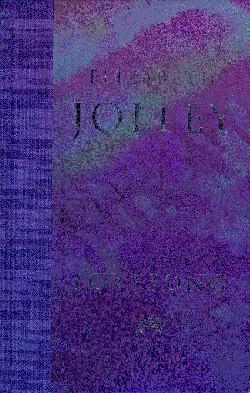
Lovesong Elizabeth Jolley |
"Across the park from Dalton's cold, bleak room is the large, overdraped house of his childhood, where now another Consul's family lives. Intrigued and well-meaning, they welcome him into the house, unaware of Dalton's past links - and his yearnings."
First Paragraph:
Sometimes during concerts he thought that, in the expression in the eyes of the conductor, he could see the reflection of the exquisite moment of perfection and of satisfaction achieved privately between the conductor and the musician concerned in the performance of the particular little phrase of the music. Especially this was so when the little phrase was played by itself and then, with matching notes, perhaps from the piano. For example, the pianist in musical communication with the flautist, the conductor, watchful, leading them together in readiness for the awaited satisfying invasion of the whole orchestra which would bring about the ultimate, the climax.
The movement of the shoulders, the head and the delicate hands - the whole body of the conductor involved completely with the creation of the music, together with the penetrating gaze of concentration, would bring about the awaited desired result and immediately soften the sharp glance to a caressing look of tenderness and deference. A look which was full of admiration and respect, a perfect understanding of love and gratitude passing between conductor and musician. The whole ensemble, then, breaking the precarious silent homage to the moment, would, with their energy and restrained precision, enter the performance once more.
He is, of course, excluded from all this as he no longer takes part (singing) and, in any case, does not go to concerts. He simply has the music in his heart and his mind.
From the Viking hardback edition, 1997.
Notes:
You can read more about Elizabeth Jolley here.
|
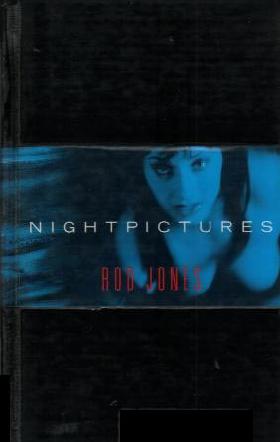
Nightpictures Rod Jones |
Dustjacket synopsis:
"We all live secret lives. During the day, we're hardly aware of them. We don't let ourselves see them. Only in the night do they come into their own, our secrets, the pictures running through our heads. Not language. Pictures. Pictures that make us tense up and groan out loud. Nightpictures.
"Sailor drifts through Venice. He is haunted by nightpictures, his most precious memories, that leave him fearful, shuddering, close to ejaculation.
"His affair with Dieppe is meant to be 'pure l'erotisme'. No kisses, definitely no falling in love.
"Dieppe has memories that haunt her, too. As their sexual relationship plays itself out amid the crumbling walls of Dieppe's shabby apartment, the verbal and sexual collide. Stories become confessions, and sex a kind of absolution.
"But some stories should never be told...
"Explicit, provocative and disturbing, Nightpictures is Rod Jones' most commanding work to date."
First Paragraph:
When we look at other people we either want to fuck them or kill them. I don't know why the world tries to keep this a secret. It's something everyone knows, really. It's one of those secrets that are told only with the eyes. It's all in that first look. Just an expression in the eyes, and you know it's happened again. The secret has been communicated without a single word being exchanged.
When I was fifteen I learned to love secrets. I learned how to hoard secrets away in the dark. And I learned about the damage they do there, eating away at our insides. A secret is like a rat, or an ulcer. A secret always finds a way out, even if it has to gnaw its way through the lining of your stomach.
At the end of one of our weekly visits to 'the specialist', I was sent out of the room and I heard him say to my mother, 'In cases like this it's almost impossible to get it out of them. Sometimes people go to the grave with their childhood secret still locked away inside. It's the story that can't be told.'
From the Allen and Unwin hardback edition, 1997.
About the Author:
Rod Jones was born in Melbourne in 1953. He studied English and History at the University of Melbourne, and has worked as
a teacher in schools and universities.
His first novel, Julia Paradise, won the South Australian Prernier's National Fiction Award in 1988, and was runner-up for the Femina Etranger prize in Paris. It has been translated into ten languages and published throughout the world. His second novel, Prince of the Lilies, interweaves Minoan archaeology and contemporary Crete.
Billy Sunday, his third novel, was published in 1995. It was the winner of the 1995 Age Book of the Year for Fiction and the 1996 National Book Council CUB/Banjo Award for Fiction. The Boston Globe called Billy Sunday 'the Great American Novel'.
This page and its contents are copyright © 2006 by Perry Middlemiss, Melbourne, Victoria, Australia.
Last modified: January 26, 2006.